Skip to content

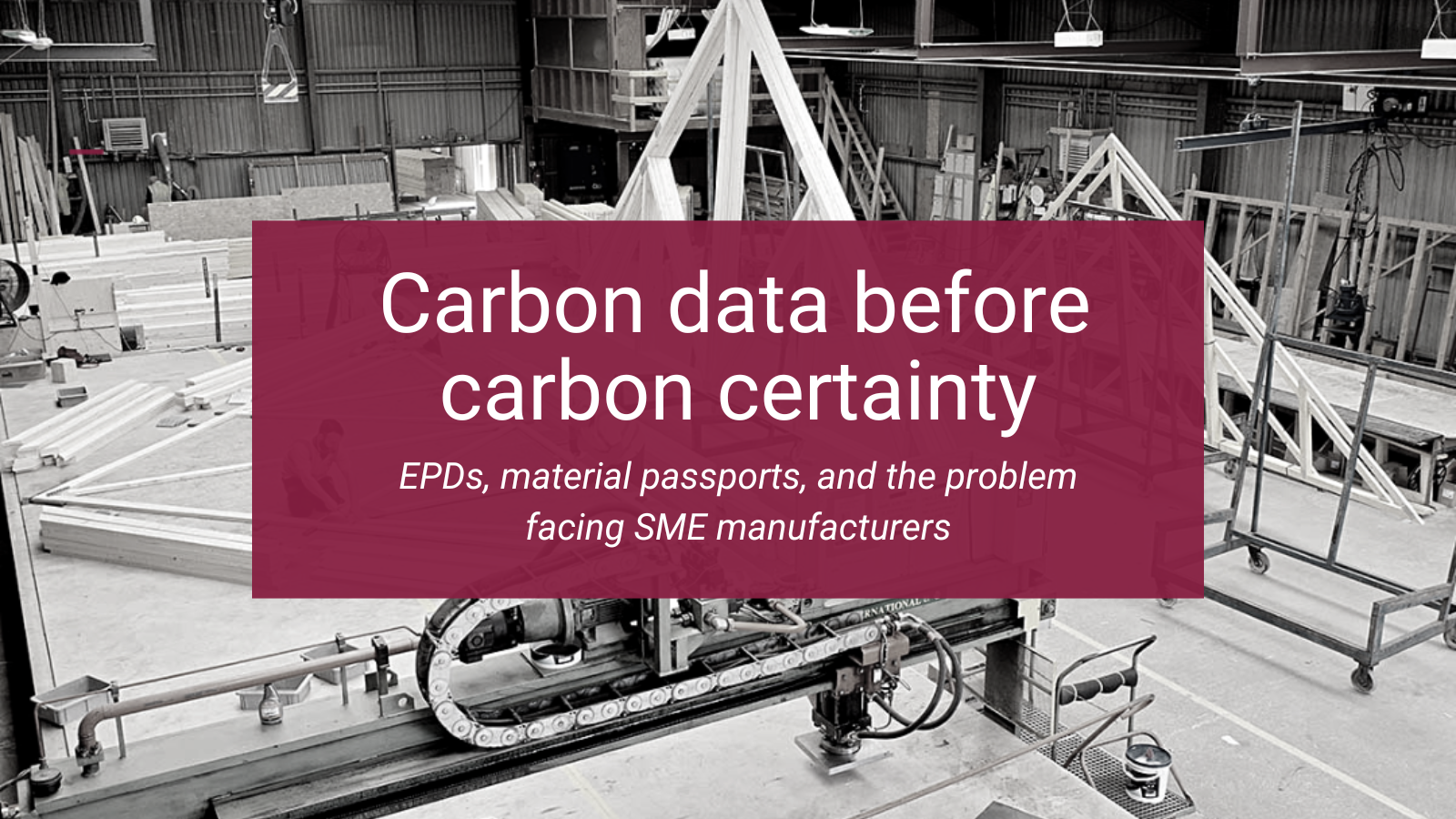
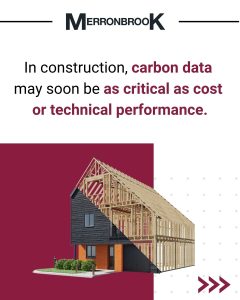
The construction industry is rapidly moving towards a future where carbon data may be as critical as cost, programme, or technical performance. Architects, developers and housebuilders increasingly understand the economic and regulatory value of lower-carbon materials – and are looking to manufacturers to provide them.
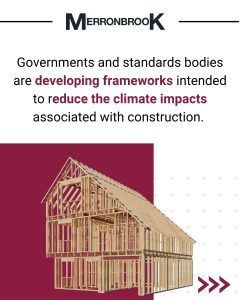
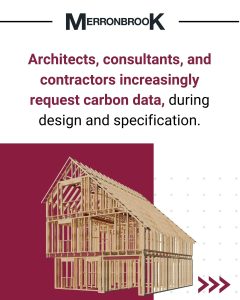
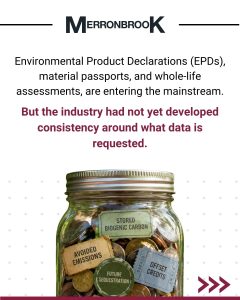
As carbon accounting becomes central to construction, Environmental Product Declarations (EPDs), material passports, whole-life assessments, and embodied-carbon limits are becoming more mainstream, requested by architects, developers, and housebuilders during specification and design.
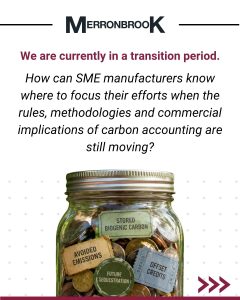
For SME manufacturers, this is an exciting time, but many also face challenges trying to meet this need for credible carbon data, while balancing that against the fact that the methodologies, standards and regulatory frameworks are still rapidly evolving.
Environmental Product Declarations (EPDs) are often treated as definitive indicators of a product’s environmental impact, but they are actually context-dependent datasets built on assumptions, boundaries, and modelling choices.
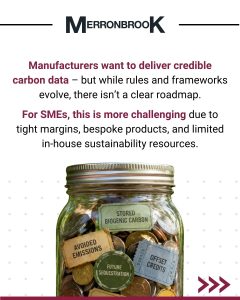
Working with SME manufacturers is so valuable because they offer bespoke product ranges and technical expertise – helping architects and developers meet specification requirements and sustainability regulations such as the Future Homes Standards. But inherently bespoke products are less suited to standard carbon data measures. While they are essential for transparency in construction, generic EPDs may not fully reflect the nuances of bespoke products, such as timber frame panels, which can vary widely in materials, design, and project-specific requirements.
Added to that, many manufacturers simply don’t have the margins to commission third-party verified EPDs, or capability for complex carbon data collection in-house, as they lack dedicated sustainability teams that larger companies might have.
All this doesn’t mean that we shouldn’t make progress – but it is vital that the construction industry, government and manufacturers work together.
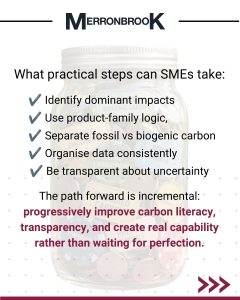
In this article our Technical Director, Andy Gibson, explores how SMEs can begin to build credible carbon-data capability through practical steps:
- ➤ Understand dominant material and energy impacts
- ➤ Develop product-family logic instead of assuming uniformity
- ➤ Separate fossil emissions from biogenic carbon
- ➤ Organise data consistently
- ➤ Focus on progress rather than chasing perfect precision
- ➤ Be transparent about uncertainty
The practical path forward is incremental: helping businesses progressively improve carbon transparency, creating real capability rather than waiting for perfect precision.
Read the full article here: Carbon Data Before Carbon Certainty – EPDs, material passports, and the problem facing SME manufacturers
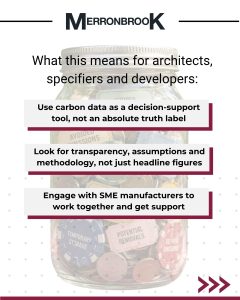
Our “Carbon data in construction & manufacturing: Building capability and delivering transparency” PDF summarises the key article takeaways in a simple, visual way:
LET’S COLLABORATE TO BUILD A MORE SUSTAINABLE FUTURE – GET IN TOUCH:
📞 01252 844747
📧 webenquiries@merronbrook.co.uk