Skip to content

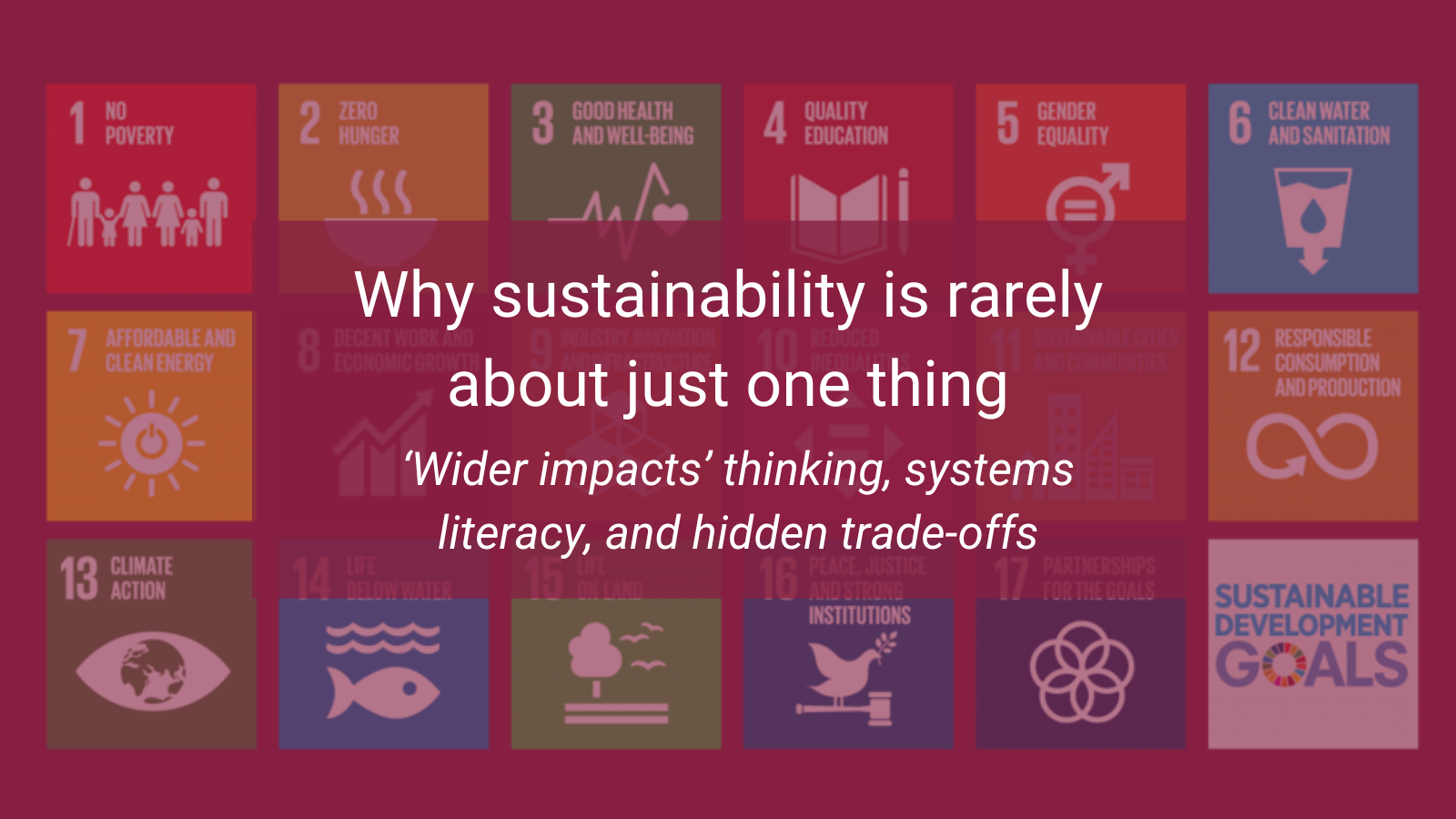
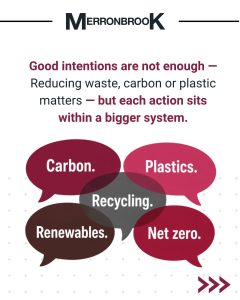
Sustainability is often framed as simple choices: reduce waste, lower carbon, recycle more. But real-world impacts rarely exist in isolation.
Even initiatives that seem positive at first glance can have unintended consequences. A drinks company reusing glass bottles may reduce plastic waste, but the bottle-washing process could consume significant water, rely on unsafe labour, or use carbon-intensive energy.
As our Technical Director, Andy Gibson, explains, sustainability is about understanding interconnected systems rather than looking at single metrics. Wider-impact thinking helps identify trade-offs, ask better questions, and balance benefits across social, environmental, and economic dimensions.
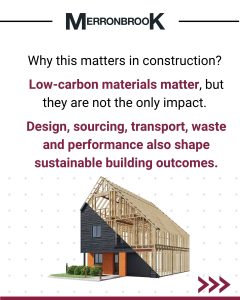
For those working in construction, this kind of thinking is especially important. Material choices, design decisions, build methods, transport and waste management all carry wider impacts beyond one headline measure. Looking at the full picture helps teams make more balanced decisions, avoid unintended consequences, and deliver buildings that perform better environmentally.
How does your team consider wider impacts and hidden trade-offs when assessing sustainability initiatives? Do headline metrics mean you miss the bigger picture?
Read the full article here: Why sustainability is rarely about just one thing – ‘Wider impacts’ thinking, systems literacy, and hidden trade-offs
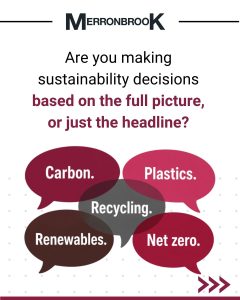
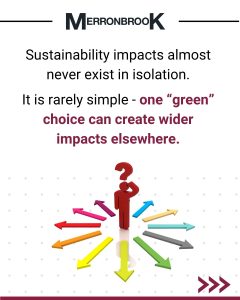
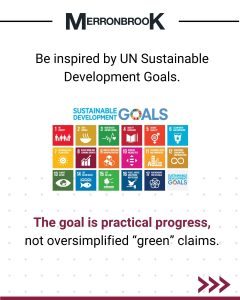
Our Sustainability, systems thinking and hidden trade-offs carousel summarises the key article takeaways in a simple, visual way:

LET’S COLLABORATE TO BUILD A MORE SUSTAINABLE FUTURE – GET IN TOUCH:
📞 01252 844747
📧 webenquiries@merronbrook.co.uk